

Radiator Cold at the Bottom? What It Means and How to Fix It
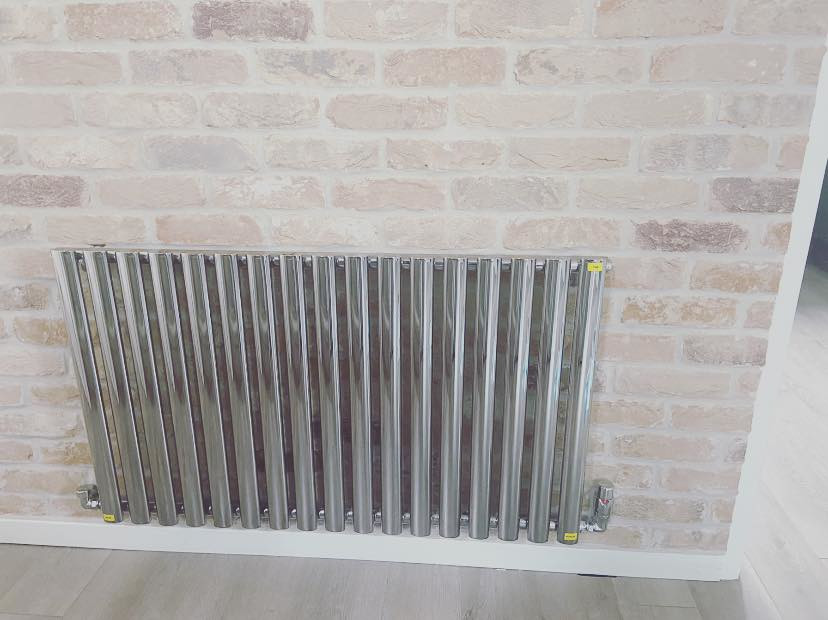
If a radiator is hot at the top but cold at the bottom, the cause is almost always sludge. Over time, the water in a central heating system picks up rust and dirt from the inside of the radiators and pipework. That sludge is heavier than water, so it settles along the bottom of the radiator and stops hot water reaching it. Bleeding the radiator will not fix it. The sludge has to come out, either by flushing that radiator or, if several are affected, by power flushing the whole system.
If it is the other way round, and the radiator is cold at the top and warm at the bottom, that is trapped air, and bleeding it usually sorts it out in a few minutes. This guide covers both, plus radiators that are cold in the middle, a single radiator that will not heat up, and what to do when some rooms are warm and others are not. It is written by SCS Plumbing & Heating, Gas Safe registered heating engineers (number 636250) working across Colchester and Essex.
In this article
- Why is my radiator cold at the bottom but hot at the top?
- What if my radiator is cold at the top?
- What do other cold patches mean?
- Why is only one radiator not getting hot?
- What can you safely check yourself?
- What is a power flush and do you need one?
- When should you call a heating engineer?
- Need help with cold radiators?
- Frequently asked questions
Why is my radiator cold at the bottom but hot at the top?
Hot water enters the radiator and should spread across the whole panel before it leaves. When the bottom stays cold, something is sitting in the way, and in most homes that something is sludge.
Sludge is a thick, dark mix of rust and debris. It forms slowly as the metal inside radiators and pipes corrodes, and it builds up faster in older systems or ones that have never had a corrosion inhibitor added to the water. Because it is heavy, it collects in the lowest part of each radiator. A radiator with a sludge build-up often feels hot across the top, lukewarm in the middle and cold along the bottom edge.
A few other signs usually go with it:
- Dark or dirty water when you bleed a radiator, instead of clear water
- Radiators that need bleeding often, because corrosion inside the system can produce gas
- A noisy boiler, with banging or kettling sounds as it struggles to move water around
- Higher heating bills for the same level of warmth, because the system is working harder
If one radiator has the problem, that radiator can often be taken off the wall and flushed through on its own. If several are cold at the bottom, the sludge is spread through the system and a power flush is usually the better fix.
What if my radiator is cold at the top?
A radiator that is cold at the top and warm at the bottom has air trapped inside it. Air rises, so it collects at the top of the radiator and stops hot water filling it. The fix is to bleed the radiator, which lets the air out through the small valve at the top corner. We explain how to do it safely in the checks section below.
Bleeding radiators can lower the pressure in a sealed heating system, so check your boiler pressure gauge afterwards. If it has dropped, our guide to what your boiler pressure should be explains how to read it and when a top up is fine.
What do other cold patches mean?
Where a radiator is cold tells you a lot about why. This table covers the patterns we see most often in Colchester homes.
| What you notice | Most likely cause | What usually fixes it |
|---|---|---|
| Cold at the bottom, hot at the top | Sludge settled in the bottom of the radiator | Flushing the radiator, or a power flush if several are affected |
| Cold at the top, warm at the bottom | Trapped air | Bleeding the radiator, then checking boiler pressure |
| Cold in the middle | Sludge or debris blocking the flow through the centre of the panel | Flushing the radiator or the system |
| One radiator cold all over | A stuck thermostatic valve, a closed valve, or a blockage | Checking both valves, then a repair or flush if needed |
| Radiators furthest from the boiler are cooler | The system is not balanced, so water takes the easiest route | Balancing the radiators |
| All radiators cold | A boiler, pressure, pump or controls problem | Checking the boiler and controls, then a repair |
If every radiator in the house is cold, the problem is unlikely to be the radiators themselves. Check that the heating is switched on at the programmer and thermostat, and look at the boiler for a fault code or low pressure. If the boiler has stopped working, our boiler repairs service in Colchester is the place to start.
Why is only one radiator not getting hot?
When one radiator stays cold while the rest of the house warms up, the cause is usually at that radiator rather than in the boiler. These are the things we check first.
- The thermostatic valve. The dial on the side of the radiator has a small pin underneath it that opens and closes the valve. If the radiator has been off all summer, that pin can stick in the closed position.
- The valve on the other side. This is the lockshield valve, usually under a plastic cap. If it has been turned off, perhaps when the room was decorated, water cannot get through.
- Air. A radiator full of air can feel cold all over, not just at the top.
- A blockage. Heavy sludge, or debris in the valve, can stop water entering at all.
If you have checked the valves and bled the radiator and it is still cold, it needs an engineer to find the blockage.
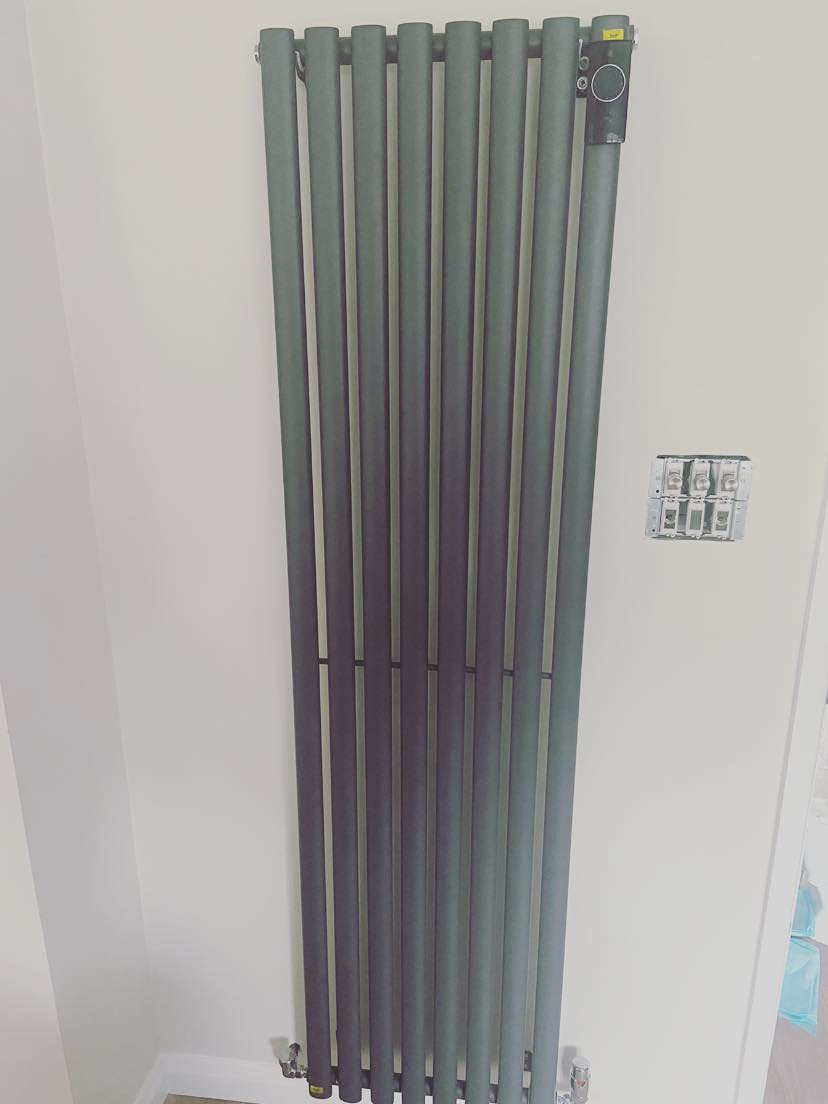
A vertical anthracite radiator from our recent work. Designer radiators can be cold at the bottom for the same reasons as standard panels.
What can you safely check yourself?
These checks are safe for most homeowners and are worth doing before you book anyone.
- Turn the heating off and let it cool. Never bleed a hot radiator. The water inside can scald.
- Bleed any radiator that is cold at the top. Hold a cloth under the bleed valve at the top corner, turn it slowly with a radiator key, and close it as soon as water starts to come out instead of air.
- Look at the water that comes out. Clear water is fine. Dark or black water points to sludge in the system.
- Check the boiler pressure. Most combi and system boilers sit at around 1 to 1.5 bar when the heating is cold. If it has dropped after bleeding, top it up as your boiler manual explains.
- Check both valves on a cold radiator. Turn the thermostatic valve fully up and make sure the valve on the other side has not been closed.
Never take the casing off your boiler or try to repair anything inside it. Work on a gas boiler must be carried out by a Gas Safe registered engineer.
What is a power flush and do you need one?
A power flush is a deep clean of your whole central heating system. A machine is connected to the system and pushes water and cleaning chemicals through the pipework and every radiator, lifting out the sludge, rust and debris and carrying it away. It restores heat output to radiators that have been running cold, can reduce your energy bills, and helps protect the boiler from the damage sludge causes.
A power flush is usually worth it if you notice:
- Several radiators cold at the bottom or in the middle
- Dark or discoloured water when you bleed a radiator
- A noisy boiler that bangs or makes kettling sounds
- Radiators taking a long time to warm up
We may also recommend a power flush before or after a new boiler is fitted, so the new boiler is not sitting on a system full of old sludge. You can read more about our power flushing service and the other central heating work we carry out.
Once a system is clean, an annual boiler service is a good chance to keep an eye on the condition of the water and spot problems early.
When should you call a heating engineer?
Call an engineer if any of these apply:
- A radiator is still cold at the bottom after you have bled it
- Several radiators are cold in the same way
- The water from the bleed valve is dark or black
- You keep having to bleed the same radiators
- The boiler is banging, kettling or losing pressure
- All the radiators are cold and the boiler is showing a fault
Sludge does not clear on its own. Left alone, it spreads through the system and puts more strain on the pump and the boiler, which can turn a cleaning job into a repair.
Need help with cold radiators?
If your radiators are cold at the bottom, cold in the middle or not heating up at all, call SCS Plumbing & Heating on 01206 912 900 or contact us to book a heating engineer. We find the cause and explain the cost before any work starts. We are rated 4.9 on Google by our customers. Our heating engineers in Colchester cover Wivenhoe, Tiptree, West Mersea, Stanway, Lexden, Marks Tey and the wider CO postcode area.
Want to see more from SCS Plumbing & Heating in Google? Add us as a preferred source and our guides are more likely to appear for you in Top Stories and Google’s AI results.
Frequently asked questions