Radiator Cold at the Bottom? What It Means and How to Fix It

Radiator Cold at the Bottom? What It Means and How to Fix It
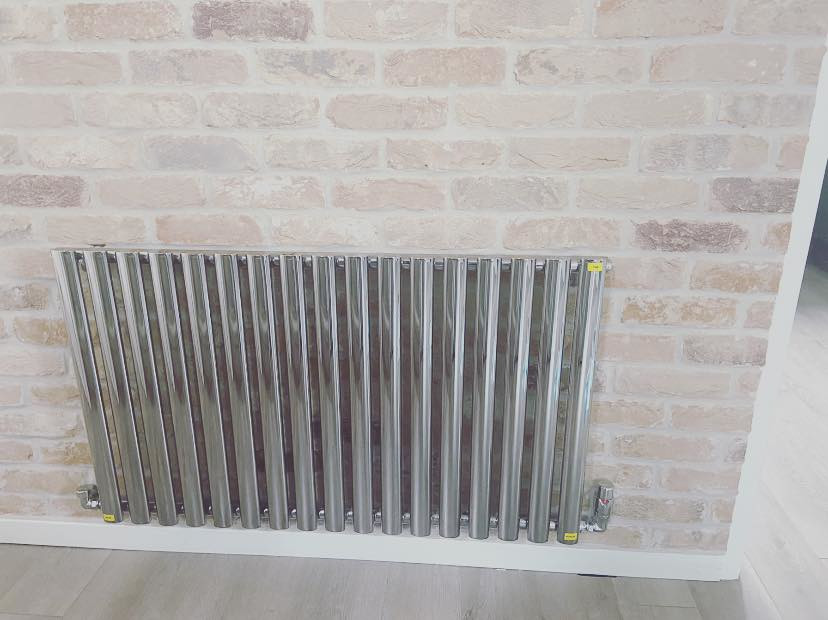
Chrome horizontal column radiator fitted on an exposed brick wall by SCS Plumbing and Heating

If a radiator is hot at the top but cold at the bottom, the cause is almost always sludge. Over time, the water in a central heating system picks up rust and dirt from the inside of the radiators and pipework. That sludge is heavier than water, so it settles along the bottom of the radiator and stops hot water reaching it. Bleeding the radiator will not fix it. The sludge has to come out, either by flushing that radiator or, if several are affected, by power flushing the whole system.

If it is the other way round, and the radiator is cold at the top and warm at the bottom, that is trapped air, and bleeding it usually sorts it out in a few minutes. This guide covers both, plus radiators that are cold in the middle, a single radiator that will not heat up, and what to do when some rooms are warm and others are not. It is written by SCS Plumbing & Heating, Gas Safe registered heating engineers (number 636250) working across Colchester and Essex.

Why is my radiator cold at the bottom but hot at the top?

Hot water enters the radiator and should spread across the whole panel before it leaves. When the bottom stays cold, something is sitting in the way, and in most homes that something is sludge.

Sludge is a thick, dark mix of rust and debris. It forms slowly as the metal inside radiators and pipes corrodes, and it builds up faster in older systems or ones that have never had a corrosion inhibitor added to the water. Because it is heavy, it collects in the lowest part of each radiator. A radiator with a sludge build-up often feels hot across the top, lukewarm in the middle and cold along the bottom edge.

A few other signs usually go with it:

  • Dark or dirty water when you bleed a radiator, instead of clear water
  • Radiators that need bleeding often, because corrosion inside the system can produce gas
  • A noisy boiler, with banging or kettling sounds as it struggles to move water around
  • Higher heating bills for the same level of warmth, because the system is working harder

If one radiator has the problem, that radiator can often be taken off the wall and flushed through on its own. If several are cold at the bottom, the sludge is spread through the system and a power flush is usually the better fix.

What if my radiator is cold at the top?

A radiator that is cold at the top and warm at the bottom has air trapped inside it. Air rises, so it collects at the top of the radiator and stops hot water filling it. The fix is to bleed the radiator, which lets the air out through the small valve at the top corner. We explain how to do it safely in the checks section below.

Bleeding radiators can lower the pressure in a sealed heating system, so check your boiler pressure gauge afterwards. If it has dropped, our guide to what your boiler pressure should be explains how to read it and when a top up is fine.

What do other cold patches mean?

Where a radiator is cold tells you a lot about why. This table covers the patterns we see most often in Colchester homes.

What you noticeMost likely causeWhat usually fixes it
Cold at the bottom, hot at the topSludge settled in the bottom of the radiatorFlushing the radiator, or a power flush if several are affected
Cold at the top, warm at the bottomTrapped airBleeding the radiator, then checking boiler pressure
Cold in the middleSludge or debris blocking the flow through the centre of the panelFlushing the radiator or the system
One radiator cold all overA stuck thermostatic valve, a closed valve, or a blockageChecking both valves, then a repair or flush if needed
Radiators furthest from the boiler are coolerThe system is not balanced, so water takes the easiest routeBalancing the radiators
All radiators coldA boiler, pressure, pump or controls problemChecking the boiler and controls, then a repair

If every radiator in the house is cold, the problem is unlikely to be the radiators themselves. Check that the heating is switched on at the programmer and thermostat, and look at the boiler for a fault code or low pressure. If the boiler has stopped working, our boiler repairs service in Colchester is the place to start.

Why is only one radiator not getting hot?

When one radiator stays cold while the rest of the house warms up, the cause is usually at that radiator rather than in the boiler. These are the things we check first.

  • The thermostatic valve. The dial on the side of the radiator has a small pin underneath it that opens and closes the valve. If the radiator has been off all summer, that pin can stick in the closed position.
  • The valve on the other side. This is the lockshield valve, usually under a plastic cap. If it has been turned off, perhaps when the room was decorated, water cannot get through.
  • Air. A radiator full of air can feel cold all over, not just at the top.
  • A blockage. Heavy sludge, or debris in the valve, can stop water entering at all.

If you have checked the valves and bled the radiator and it is still cold, it needs an engineer to find the blockage.
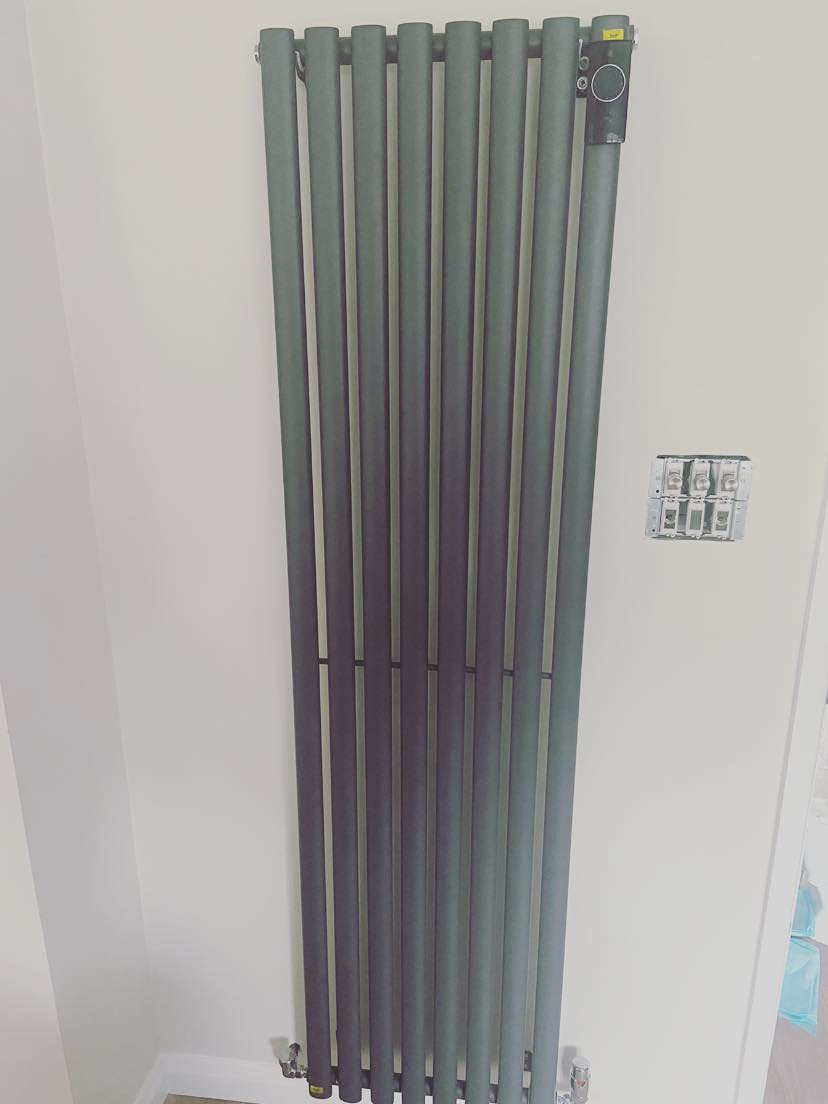
Tall anthracite vertical designer radiator with a thermostatic valve, fitted on a white wall by SCS Plumbing and Heating

A vertical anthracite radiator from our recent work. Designer radiators can be cold at the bottom for the same reasons as standard panels.

What can you safely check yourself?

These checks are safe for most homeowners and are worth doing before you book anyone.

  1. Turn the heating off and let it cool. Never bleed a hot radiator. The water inside can scald.
  2. Bleed any radiator that is cold at the top. Hold a cloth under the bleed valve at the top corner, turn it slowly with a radiator key, and close it as soon as water starts to come out instead of air.
  3. Look at the water that comes out. Clear water is fine. Dark or black water points to sludge in the system.
  4. Check the boiler pressure. Most combi and system boilers sit at around 1 to 1.5 bar when the heating is cold. If it has dropped after bleeding, top it up as your boiler manual explains.
  5. Check both valves on a cold radiator. Turn the thermostatic valve fully up and make sure the valve on the other side has not been closed.

Never take the casing off your boiler or try to repair anything inside it. Work on a gas boiler must be carried out by a Gas Safe registered engineer.

What is a power flush and do you need one?

A power flush is a deep clean of your whole central heating system. A machine is connected to the system and pushes water and cleaning chemicals through the pipework and every radiator, lifting out the sludge, rust and debris and carrying it away. It restores heat output to radiators that have been running cold, can reduce your energy bills, and helps protect the boiler from the damage sludge causes.

A power flush is usually worth it if you notice:

  • Several radiators cold at the bottom or in the middle
  • Dark or discoloured water when you bleed a radiator
  • A noisy boiler that bangs or makes kettling sounds
  • Radiators taking a long time to warm up

We may also recommend a power flush before or after a new boiler is fitted, so the new boiler is not sitting on a system full of old sludge. You can read more about our power flushing service and the other central heating work we carry out.

Once a system is clean, an annual boiler service is a good chance to keep an eye on the condition of the water and spot problems early.

When should you call a heating engineer?

Call an engineer if any of these apply:

  • A radiator is still cold at the bottom after you have bled it
  • Several radiators are cold in the same way
  • The water from the bleed valve is dark or black
  • You keep having to bleed the same radiators
  • The boiler is banging, kettling or losing pressure
  • All the radiators are cold and the boiler is showing a fault

Sludge does not clear on its own. Left alone, it spreads through the system and puts more strain on the pump and the boiler, which can turn a cleaning job into a repair.

Need help with cold radiators?

If your radiators are cold at the bottom, cold in the middle or not heating up at all, call SCS Plumbing & Heating on 01206 912 900 or contact us to book a heating engineer. We find the cause and explain the cost before any work starts. We are rated 4.9 on Google by our customers. Our heating engineers in Colchester cover Wivenhoe, Tiptree, West Mersea, Stanway, Lexden, Marks Tey and the wider CO postcode area.

Want to see more from SCS Plumbing & Heating in Google? Add us as a preferred source and our guides are more likely to appear for you in Top Stories and Google’s AI results.

Add SCS Plumbing & Heating as a preferred source on Google

Frequently asked questions

Will bleeding a radiator fix it if it is cold at the bottom?

Usually not. Bleeding lets out trapped air, which makes a radiator cold at the top. A radiator that is cold at the bottom normally has sludge in it, which has to be flushed out instead.

Can I flush a radiator myself?

It is possible on a single radiator, but it means isolating it, draining it, taking it off the wall and flushing it through outside, which can be messy. If more than one radiator is affected, the sludge is in the whole system and a power flush will do a better job.

Why are my radiators cold at the bottom after having the heating off all summer?

Sludge settles while the system is not running, so the problem often shows up when the heating first comes back on in autumn. If the radiators stay cold at the bottom after a few days of normal use, the sludge needs removing.

What does black water from a radiator mean?

Black or dark water is a sign of sludge, which is rust and debris from inside your radiators and pipework. One or two drops is not a worry, but a steady flow of dirty water usually means the system needs flushing.

Why are my radiators hot downstairs but cold upstairs?

It can be trapped air, a system that needs balancing, or a circulation problem such as a failing pump. Start by bleeding the upstairs radiators. If that does not help, a heating engineer can find the cause.

How much does it cost to fix a radiator that is cold at the bottom?

It depends on whether one radiator needs flushing or the whole system needs a power flush. We find the cause first and give you a clear quote before any work begins. Call 01206 912 900 to book.

Published
Categorised as News

Why Does My Boiler Keep Losing Pressure?

Why Does My Boiler Keep Losing Pressure?

Gas Safe engineer repairing a boiler in Colchester

If you keep having to top up your boiler pressure, something is letting water out of the system. Most of the time the cause is simple to find, but topping up again and again only hides it, and some causes need a Gas Safe engineer to put right.

This guide explains what normal boiler pressure looks like, the usual reasons it drops, what you can safely check yourself, and when to call someone out. It is written by SCS Plumbing & Heating, Gas Safe registered engineers (number 636250) who repair boilers across Colchester and Essex.

What should my boiler pressure be?

Most combi and system boilers run at around 1 to 1.5 bar when the heating is off and the system is cold. The needle usually rises a little when the heating is on, often to around 2 bar, and settles back when it cools. Your boiler manual will give the exact range for your model, and many gauges have a green zone marked on them.

A reading below 1 bar is low. Many boilers will lock out and show a fault code once pressure drops too far, which is often the first sign people notice.

Why does a boiler keep losing pressure?

A sealed heating system should hold its pressure for months at a time. If it keeps falling, water is getting out or the system cannot cope with it expanding as it heats up. These are the causes we find most often in Colchester homes.

CauseWhat you might noticeCan you check it yourself?
A leak on a radiator, valve or pipe jointDamp patches, staining, a drip under a radiator valve or rusty marks on pipeworkYes, you can look for signs of water around visible pipes and radiators
Radiators have recently been bledPressure dropped straight after bleeding and has stayed steady sinceYes, this is normal and just needs a top up
Faulty pressure relief valveA small copper pipe outside the house that drips or leaves a wet patchYou can look at the pipe, but the valve must be replaced by an engineer
Failed expansion vesselPressure climbs high when the heating is on, then drops well below 1 bar when it coolsYou can watch the gauge, but the fix needs an engineer
A leak inside the boilerWater inside or under the boiler casingNo. Do not open the casing. Call a Gas Safe engineer

What can you safely check yourself?

  1. Note the reading. Check the gauge when the heating is off and cold, and again an hour after it has been on. Write both down.
  2. Look for water. Check around radiators, radiator valves, towel rails and any pipework you can see, including under sinks and in the airing cupboard.
  3. Check the pipe outside. Find the small copper pipe that runs from the boiler through the outside wall. If it is dripping or the ground under it is wet, the pressure relief valve may be letting water out.
  4. Top up if you know how. Most boilers have a filling loop or key. Follow the instructions in your boiler manual, bring the pressure back to the level it recommends, then close the valves fully.

Never remove the boiler casing or try to repair anything inside it. Work on a gas boiler must be done by a Gas Safe registered engineer.

When should you call a Gas Safe engineer?

Call an engineer if any of these apply:

  • You have had to top up the pressure more than once or twice in a few weeks
  • The pressure goes above 3 bar, or swings from high to low as the heating comes on and off
  • The pipe outside is dripping
  • You can see water inside or under the boiler
  • The boiler keeps locking out with a fault code even after a top up

A slow leak rarely fixes itself, and running a boiler at low pressure over and over can wear parts faster. Our boiler repairs service in Colchester finds where the water is going and fixes it, rather than repressurising and leaving.

What does a boiler pressure repair involve?

Our engineer will check the pressure, the expansion vessel charge and the pressure relief valve, then trace any leak on the system. Once we know the cause, you get a fixed price before any work starts. We carry common parts on the van to cut down on return visits.

If your boiler is older and has needed several repairs, we will tell you honestly whether it is worth fixing. Our guide to what a new boiler costs in Colchester and our comparison of combi, system and heat-only boilers can help if you are weighing up a replacement.

Can an annual service stop pressure problems?

It helps. A yearly boiler service includes checks on seals, valves and the pressure in the system, so worn parts are more likely to be spotted before they start letting water out. It will not stop every leak on your radiators or pipework, but it catches a lot of the problems that cause pressure loss inside the boiler.

Need help with your boiler pressure?

If your boiler keeps losing pressure, call SCS Plumbing & Heating on 01206 912 900 or contact us to book a repair. Let us know the make of your boiler and the readings you have noted, and our engineer will come prepared. You can also read more about our boiler repairs across Colchester.

Want to see more from SCS Plumbing & Heating in Google? Add us as a preferred source and our guides are more likely to appear for you in Top Stories and Google’s AI results.

Add SCS Plumbing & Heating as a preferred source on Google

Frequently asked questions

Is it dangerous if my boiler pressure is low?

Low pressure is not dangerous in itself, but the boiler will usually stop working properly or lock out. Low pressure is often a sign of a leak, which can damage your home if it is left, so it is worth finding the cause.

How often should I have to top up my boiler pressure?

Rarely, if ever. A healthy sealed system should hold its pressure for months. If you are topping up more than once or twice in a few weeks, something is letting water out and it needs looking at.

Why does my boiler pressure drop when the heating goes off?

Pressure naturally rises as the water heats and falls as it cools. A small change is normal, but a big swing from high to low usually points to a failed expansion vessel, which needs an engineer to check and recharge or replace.

Can I repressurise my boiler myself?

Yes, most boilers are designed to be topped up by the homeowner using a filling loop or key. Follow your boiler manual, bring it to the recommended level and close the valves fully afterwards. Never open the boiler casing.

What is the small pipe outside my house that is dripping?

It is usually the pressure relief valve discharge pipe. If it drips, the valve may be faulty or the pressure may be too high, and both need a Gas Safe engineer to check.

How much does it cost to fix a boiler that keeps losing pressure?

It depends on the cause, so we find the fault first. You then get a fixed price before any work starts, and you will not be charged more than the agreed amount. Call 01206 912 900 to book.

Published
Categorised as News

What Does a Boiler Service Cost, and Is It Worth It?

What Does a Boiler Service Cost, and Is It Worth It?

Gas Safe engineer servicing a boiler in Colchester

The cost of a boiler service depends on your boiler: its type, make and model, and how easy it is to get to. With SCS Plumbing & Heating, the price is confirmed when you book, so you know exactly what you will pay before the engineer arrives. This guide explains what affects the price, what a service covers, how long the visit takes, and what landlords need to know about the Gas Safety Certificate (CP12).

We are Gas Safe registered engineers (number 636250) servicing boilers for homeowners and landlords across Colchester and Essex.

How much is a boiler service in Colchester?

Every boiler is different, so we price each service for your boiler and confirm it before any work starts. There are no call-out surprises. For a price, call us on 01206 912 900 or send us your boiler details.

The things that affect the price are:

  • The type of boiler. Combi boilers are usually the quickest to service. System and heat-only boilers can take a little longer.
  • The make and model. Some boilers have more parts to inspect and clean than others.
  • Access. A boiler in a tight cupboard or loft can take longer to work on.
  • Small remedial work. If the engineer finds a minor issue on the day, we will explain it and price it before doing anything extra.

Every service covers a full set of safety and efficiency checks, from the flue and burner to combustion analysis, and you get a written record afterwards. Our boiler service in Colchester page lists every check we carry out.

How long does a boiler service take?

A standard annual service usually takes between 45 minutes and 1.5 hours, depending on the boiler and how easy it is to get to. We will let you know in advance if we expect the visit to take longer.

Is a boiler service worth the money?

For most households, yes. The main reasons are:

  • Safety. The service checks for problems that could lead to a gas leak or a carbon monoxide escape. Carbon monoxide has no smell, so a check is the only way to know.
  • Your warranty. Most manufacturers make an annual service a condition of the warranty, and missing one can void your cover.
  • Running costs. A clean, correctly set up boiler uses less gas to heat your home.
  • Fewer breakdowns. Worn parts are spotted early, rather than failing on a cold night and needing an emergency boiler repair.

Do landlords need a CP12 as well as a service?

A Gas Safety Certificate, also called a CP12, is a legal requirement for landlords. It confirms that the gas appliances in a rented property, including the boiler, have been checked by a Gas Safe registered engineer and are safe to use, and it has to be renewed every year.

A service and a CP12 are not the same thing. If you are a landlord and need a Gas Safety Certificate as well, mention it when you book your service and we will talk you through what is needed. For gas safety checks on other appliances, see our gas engineers in Colchester.

Service or repair: which do you need?

A service is a routine check on a boiler that is working. If your boiler has already broken down, is leaking or keeps losing pressure, you need a repair instead.

Boiler serviceBoiler repair
When to bookOnce a year while the boiler is working, ideally before winterWhen something is wrong: no heat or hot water, a leak, a fault code
What happensSafety and efficiency checks, cleaning and a written recordThe engineer finds the fault and fixes it
PriceConfirmed when you book, based on your boilerFixed price agreed after diagnosis, before work starts

See our boiler repairs page if your boiler needs fixing rather than servicing.

When is the best time to book?

Late summer or autumn, before you start relying on your heating. If your boiler is older and the engineer finds it is running well below its original efficiency, we can also talk you through a replacement boiler.

Book your boiler service

Call SCS Plumbing & Heating on 01206 912 900 or contact us to book your boiler service. We service all major brands, including Worcester Bosch, Vaillant, Baxi, Ideal, Glow-worm and Potterton, across Colchester, Wivenhoe, Tiptree, West Mersea, Stanway, Lexden, Marks Tey and the wider CO postcode area. Find out more about our annual boiler servicing.

Want to see more from SCS Plumbing & Heating in Google? Add us as a preferred source and our guides are more likely to appear for you in Top Stories and Google’s AI results.

Add SCS Plumbing & Heating as a preferred source on Google

Frequently asked questions

How often should a boiler be serviced?

Once a year. Most manufacturers and Gas Safe engineers recommend an annual service, and it is a condition of most boiler warranties.

Is a boiler service a legal requirement?

Not for homeowners, but it is strongly recommended and usually needed to keep your warranty valid. Landlords must have a Gas Safety Certificate (CP12) every year. If you need one, mention it when you book your service.

What happens if the engineer finds a fault during the service?

We explain the problem and tell you honestly whether it needs fixing now, watching, or a replacement. No extra work is done without your agreement and a confirmed price.

Do your engineers carry Gas Safe ID?

Yes. All SCS engineers who do gas work are Gas Safe registered (number 636250), and you can check this on the Gas Safe Register website. We will always show ID on request.

Can you service any make of boiler?

Yes. We service all major brands including Worcester Bosch, Vaillant, Baxi, Ideal, Glow-worm and Potterton. If you are unsure about your model, call 01206 912 900.

Will I get a record of the service?

Yes. You get a written service record after every visit. Keep it with your boiler paperwork, as most manufacturers ask to see proof of annual servicing if you make a warranty claim.

Published
Categorised as News

How Much Does a Bathroom Installation Cost in Colchester? (2026)

How Much Does a Bathroom Installation Cost in Colchester? (2026)

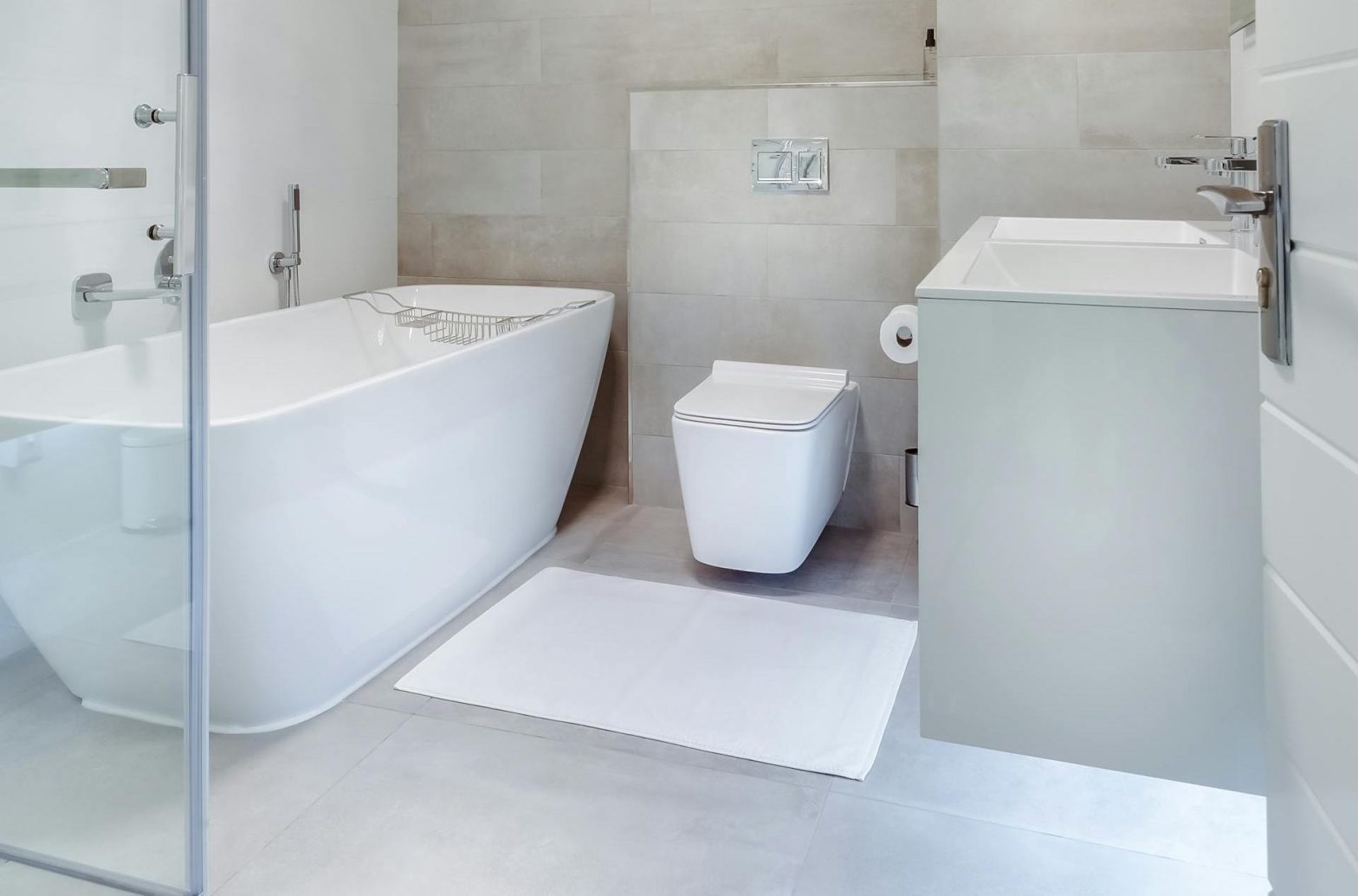
SCS Bathroom Company Colchester

A new bathroom is one of the most rewarding home improvements you can make – and one of the most variable in price. Costs swing widely depending on the size of the room, the products you choose, and how much needs changing. This guide gives realistic 2026 figures for a bathroom installation in Colchester so you can budget with confidence. SCS Plumbing & Heating handles the complete project – design, plumbing, tiling and fitting – with one team and one fixed quote, rated 4.9 on Google from 80+ reviews.

Bathroom Installation Prices in Colchester (2026)

Project typeTypical cost (supplied & fitted)What’s involved
Cloakroom / WC refresh£2,000 – £3,500Toilet, basin, small-space fit
Standard bathroom (like-for-like)£4,000 – £7,000Bath/shower, toilet, basin, tiling
Mid-range full refit£6,000 – £10,000New layout, quality fittings, full tiling
Premium / large bathroom£10,000 – £15,000+High-end products, bespoke design
Wet room conversion£5,000 – £10,000Full tanking, drainage, tiling, screen

What Affects the Price of a New Bathroom?

  • Room size – more square metres means more tiling, materials and labour
  • Products chosen – the suite, taps, shower and tiles range from budget to luxury
  • Layout changes – moving the toilet, bath or basin means new pipework and adds cost
  • Wet room vs standard – wet rooms need full tanking and specialist drainage
  • Tiling – full floor-to-ceiling tiling costs more than part-tiling
  • Extras – underfloor heating, heated towel rails, smart showers and bespoke lighting

Ready to plan your project? See our full bathroom installation Colchester service, browse our recent work, or call 01206 912 900 for a free itemised quote.

Frequently Asked Questions – Bathroom Installation Costs

How much does a new bathroom cost in Colchester?

A standard like-for-like bathroom typically costs between £4,000 and £7,000 supplied and fitted, while a full refit with new layout and quality fittings ranges from £6,000 to £10,000. Smaller cloakrooms cost less; premium or large bathrooms cost more. We provide a free itemised quote after a survey.

How much does a wet room cost to install?

A wet room conversion typically costs between £5,000 and £10,000 in Colchester. Wet rooms need full waterproof tanking and specialist drainage, which is why they usually cost more than fitting a standard shower enclosure of the same size.

What’s the biggest factor in the cost of a bathroom?

The two biggest factors are the products you choose and whether the layout changes. A like-for-like refit using mid-range fittings is far cheaper than a re-design that moves the toilet, bath and basin, which requires new pipework.

Do you supply the bathroom or do I buy it?

Either works. We can supply and fit from trusted suppliers, or fit products you’ve already bought. If you’d like guidance, we can recommend options to suit your budget and style before you commit.

How long does a bathroom installation take?

A full bathroom installation usually takes 5-10 working days depending on the size of the room, the complexity of the project, and the products chosen. We’ll give you a realistic timeline in your quote.

Do you handle the tiling and electrics too?

Yes. We handle plumbing, tiling and fitting in-house, and carry out electrical work with a registered electrician. You deal with one team from start to finish rather than coordinating several trades.

Do you offer free quotes for bathroom installation?

Yes. We provide free, no-obligation, itemised quotes for bathroom installations across Colchester and Essex. Call 01206 912 900 to arrange a visit.

Published
Categorised as News

Combi Boiler vs System Boiler vs Heat-Only: Which Is Right for Your Home?

Combi Boiler vs System Boiler vs Heat-Only: Which Is Right for Your Home?

Updated 18 November 2026

Gas boiler on grey wall

Choosing a new boiler is not only about brand and budget. The type of boiler matters most, because it has to match how your home uses heating and hot water. There are three main types: combi, system and heat-only (also called conventional or regular). This guide explains how each one works, who it suits, the pros and cons, and the questions to ask before you decide. As Gas Safe registered (636250) heating engineers, SCS Plumbing & Heating installs all three across Colchester and Essex.

The short answer: a combi boiler usually suits a smaller home with one bathroom, a system boiler suits a larger home where two or more showers or taps run at once, and a heat-only boiler suits an older home already set up with a cylinder and loft tank, or one with low mains water pressure.

Combi (Combination) Boilers

A combi boiler heats water straight from the mains when you turn on a tap, and runs your central heating from the same unit. There is no hot water cylinder and no tank in the loft.

Best for: smaller homes and flats with one bathroom and moderate hot water use.

Advantages of a combi boiler

  • Takes up the least space, with no cylinder or loft tank
  • Hot water on demand, so it does not run out
  • No stored hot water cooling down in a cylinder
  • Usually the lowest installation cost of the three types

Disadvantages of a combi boiler

  • Flow drops when two showers or taps run at the same time
  • Performance depends on the pressure and flow of your incoming mains water
  • Not suited to homes where several bathrooms are often in use at once

System Boilers

A system boiler heats your radiators directly and stores hot water in a separate cylinder, usually in an airing cupboard. Most of the key parts, such as the pump and expansion vessel, are built into the boiler, so there is no tank in the loft.

Best for: larger homes with two or more bathrooms.

  • Pros: several showers and taps can run at once with good pressure; can work alongside solar thermal panels; no loft tank
  • Cons: needs space for a cylinder; once the stored hot water is used it takes time to reheat; the cylinder has to be sized correctly for your household

Heat-Only (Conventional / Regular) Boilers

A heat-only boiler works with both a hot water cylinder and a cold water storage tank, usually in the loft. It is the traditional setup in many older and larger homes.

Best for: older, larger homes already set up this way, or properties with low mains water pressure.

  • Pros: copes well with high hot water demand; works where mains pressure is too low for a combi; often the simplest swap where the home already has this setup
  • Cons: takes up the most space; more parts to maintain; the loft tank needs to be kept in good condition

Combi Boiler vs System Boiler: The Key Differences

This is the choice most homeowners face. The main differences are:

  • Hot water: a combi heats water as you use it, while a system boiler draws from a stored cylinder.
  • Several outlets at once: a system boiler handles two showers running together far better than a combi.
  • Space: a combi needs only a wall-hung unit, while a system boiler also needs room for a cylinder.
  • Mains pressure: a combi relies on good incoming pressure and flow, while a system boiler is less affected once the cylinder is full.
  • Installation: a like-for-like swap is simplest. Moving from a system boiler to a combi, or the other way round, means changes to pipework and the cylinder, which adds to the cost.

Combi vs System vs Heat-Only at a Glance

FeatureCombiSystemHeat-only
Hot water cylinderNoYesYes
Loft tankNoNoYes
Best home sizeSmall to mediumMedium to largeLarge or older
Multiple bathroomsLimitedGoodGood
Space neededLeastMediumMost
Typical install costLowestMidMid to high
Hot water on demandYesNoNo
Two showers at the same timeLimitedGoodGood
Relies on mains pressureYesLess soNo

How to Choose: Questions to Ask

  1. How many bathrooms do you have, and are they often used at the same time?
  2. How many people live in the home, and when do they use the most hot water?
  3. What is your mains water pressure and flow like? We test this during a survey.
  4. Do you have space for a cylinder, or would you rather free up the airing cupboard and loft?
  5. What system do you have now? Keeping the same type is usually the simplest and cheapest option.
  6. Are you planning an extension or an extra bathroom? Choose a boiler for how the home will be used in future, not only today.

Switching From One Boiler Type to Another

Changing type is common, most often from a heat-only system to a combi to free up the airing cupboard and loft. It means removing the cylinder and tank and reworking some pipework, so it costs more than a like-for-like replacement. Our guide to how much a new boiler costs in Colchester sets out typical prices for each type and for full system conversions.

Whichever type suits your home, our Gas Safe engineers can supply and fit it. See our boiler installation in Colchester service, or call 01206 912 900 to book a free survey.

Frequently Asked Questions: Choosing a Boiler

What is the difference between a combi and a system boiler?

A combi boiler heats water on demand from a single unit with no cylinder or tank, making it ideal for smaller homes. A system boiler stores hot water in a separate cylinder, so it can supply several taps and showers at once, which suits larger households with multiple bathrooms.

Which boiler is best for a small home or flat?

A combi boiler is usually the best choice for a small home or flat. It’s compact, needs no separate cylinder or loft tank, and provides instant hot water, which makes it ideal where space is limited and hot water demand is moderate.

Which boiler is best for a home with two bathrooms?

A system boiler is generally better for homes with two or more bathrooms, because the stored hot water in the cylinder can supply several outlets at the same time without a drop in flow.

Can I switch from a heat-only boiler to a combi?

Yes, this is a common upgrade. Converting from a conventional heat-only system to a combi means removing the cylinder and loft tank and reworking some pipework, so it costs more than a like-for-like swap, but it frees up space and simplifies the system.

Do system and heat-only boilers run out of hot water?

They can, because they rely on stored hot water in a cylinder. Once it’s used up it needs time to reheat. Sizing the cylinder correctly to your household’s demand avoids this in normal use, and we factor this into every installation.

How do I know which boiler I need?

The right boiler depends on your property size, number of bathrooms, hot water habits, mains pressure and existing setup. The simplest way to be sure is a free survey. We’ll assess your home and recommend the most suitable type. Call 01206 912 900.

Is a combi boiler cheaper to run than a system boiler?

It depends on how you use hot water. A combi only heats the water you use, so there is no stored hot water cooling in a cylinder. In a larger home with high demand, a correctly sized system boiler can be the better fit. The right type for your home matters more than the type on paper.

Do I need good water pressure for a combi boiler?

Yes. A combi takes its hot water straight from the mains, so the pressure and flow coming into your home decide how well it performs. We check this during every survey before recommending a combi.

Published
Categorised as News

How Much Does a New Boiler Cost in Colchester? (2026 Guide)

How Much Does a New Boiler Cost in Colchester? (2026 Guide)

A Gas Engineer Servicing a Boiler in Colchester, Essex

If your boiler is on its last legs, the first question is almost always "how much is this going to cost me?" The honest answer is that it depends - on the type of boiler, the brand, and how much work the installation involves. This guide breaks down realistic 2026 prices for a new boiler in Colchester so you know what to expect before you ask for a quote. SCS Plumbing & Heating are local, Gas Safe registered (636250) heating engineers, and every job we quote is a fixed price with no hidden extras.

New Boiler Prices in Colchester (2026)

Boiler typeTypical supplied & fitted priceBest for
Combi boiler (budget)£1,800 – £2,400Smaller homes, 1 bathroom
Combi boiler (mid/premium)£2,400 – £3,500Most family homes
System boiler£2,500 – £3,800Larger homes, 2+ bathrooms
Heat-only (conventional)£2,300 – £3,500Older / larger properties
Full system conversion£3,500 – £5,000+Changing boiler type or relocating

What Affects the Price of a New Boiler?

  • Boiler type - combi boilers are usually cheapest to fit; system and heat-only installs involve more components
  • Brand and warranty - Worcester Bosch and Vaillant sit at the premium end with long warranties; Ideal and Baxi offer strong value
  • Like-for-like vs conversion - swapping a combi for a combi is quick; converting from a conventional system means removing tanks and reworking pipework
  • Boiler relocation - moving the boiler adds flue, gas and pipework
  • System upgrades - a power flush, new radiators or smart controls add to the total but improve efficiency
  • Flue type and access - awkward or extended flue runs take longer

Should I Buy the Boiler Myself?

It's usually a false economy. When SCS supplies and fits the boiler, you get the correct unit for your home, a single point of responsibility if anything goes wrong, and - crucially - the manufacturer's extended warranty, which is often only valid when the boiler is fitted by a registered engineer. Buying online and asking someone to fit it can void that cover.

Ready for a fixed price? See our boiler installation Colchester service, read our guide to combi vs system vs heat-only boilers, or contact us for a free quote on 01206 912 900.

Frequently Asked Questions - New Boiler Costs

How much does a new combi boiler cost in Colchester?

A supplied-and-fitted combi boiler typically ranges from around £1,800 for a budget model up to £3,500 for a premium brand with a long warranty. A straightforward like-for-like swap is at the lower end; a conversion from another system type costs more.

Why are some boiler quotes so much higher than others?

Price differences usually come down to boiler brand and warranty, the amount of pipework involved, and whether the job is a simple swap or a full conversion. The cheapest quote isn't always the best value - check what's included, the warranty length, and that the installer is Gas Safe registered.

Is it cheaper to repair my old boiler or replace it?

If your boiler is under 10 years old and the fault is a single component, a boiler repair is usually better value. If it's over 10-15 years old, breaking down repeatedly, or running inefficiently, a replacement will often save money within a few years through lower bills and fewer call-outs.

Should I buy the boiler myself and just pay for fitting?

We don't recommend it. Supplying the boiler ourselves means you get the right unit for your home, a single point of responsibility, and the manufacturer's extended warranty - which is often only valid when a registered engineer supplies and fits it.

Does a new boiler reduce my energy bills?

Usually, yes. Modern A-rated boilers run at 90%+ efficiency versus 60-70% for many older units. Replacing an old boiler can noticeably cut your annual heating costs, especially when paired with a smart thermostat.

How long does a new boiler installation take?

A like-for-like combi replacement is usually a one-day job. A system conversion or a relocation with new pipework can take two to three days. We'll confirm the timeline in your quote.

Do you offer free quotes for a new boiler?

Yes. We provide free, no-obligation quotes for new boilers across Colchester and Essex. We survey your property, recommend the right boiler, and give you a fixed written price. Call 01206 912 900 to arrange a visit.

Published
Categorised as News